Facebook Marketplace Car Scams: How to Protect Yourself
Facebook Marketplace has become one of the biggest places to buy and sell used cars in the UK. The prices are often lower than AutoTrader, there's no dealer markup, and you can message the seller directly. But that same informality is exactly what scammers rely on.
This guide covers the most common car scams on Facebook Marketplace right now and how to protect yourself from every one of them.
Why Facebook Marketplace attracts car scams
Unlike AutoTrader or eBay Motors, Facebook Marketplace has almost no seller verification. Anyone with a Facebook account can list a car. There's no requirement to prove ownership, no dealer checks, and no purchase protection if something goes wrong.
That makes it a hunting ground for:
- Sellers listing cars they don't own (or don't have the right to sell)
- Cars with hidden histories: write-offs, clocked mileage, outstanding finance
- Outright fake listings designed to steal a deposit
The deals can be genuinely good. But you need to know what you're looking at.
The most common Facebook Marketplace car scams
1. The clocked mileage scam
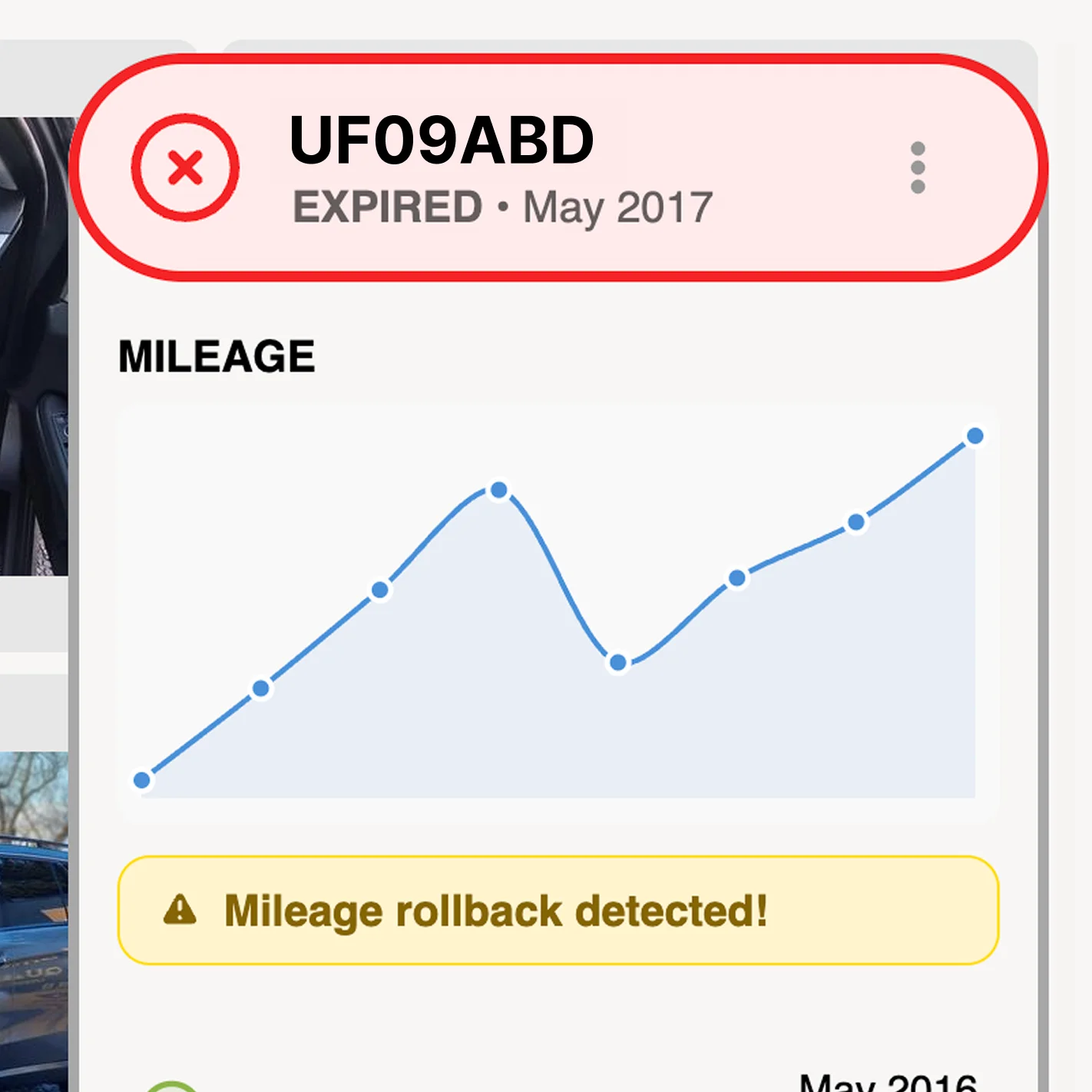
A car is advertised with 40,000 miles, priced accordingly. What the listing doesn't tell you is that the car had 90,000 miles on it two years ago.
Winding back an odometer (clocking) is illegal, but it still happens. One way to catch it is by checking the MOT history, which records the mileage at every test date. If those numbers don't add up, walk away.

2. The write-off scam
A car that's been in a serious accident is written off by the insurer and categorised as CAT S (structural damage) or CAT N (non-structural damage). These cars can legally be repaired and sold, but the seller must disclose it.
Many don't.
A CAT S car that hasn't been properly repaired can be dangerous to drive. A CAT N car might look fine but have hidden frame damage affecting safety. Either way, you're buying a car worth significantly less than what's advertised.
Always run a full vehicle history check before viewing. A basic free check will flag write-off status.
3. The outstanding finance scam
The seller owes £6,000 on a finance agreement for the car. The car still legally belongs to the finance company, not the seller. They sell it to you for £5,000, pocket the cash, and stop making payments.
A few months later, the finance company repossesses the car from your driveway. Legally, it's theirs. You lose the car and the money.
This is one of the most common used car scams in the UK. Always check for outstanding finance before buying from a private seller.
4. The deposit scam
You spot a great deal, usually priced well below market value. The seller says there's a lot of interest, but if you pay a deposit they'll hold it for you. They're "working away" or "abroad" and can't meet in person right now.
There is no car. Once you transfer the deposit, the listing disappears.
Never pay a deposit for a car you haven't seen in person. No legitimate private seller needs a deposit before a viewing.
5. The stolen car scam
The car is listed at an attractive price. The V5C logbook looks genuine. But the car was stolen, the plates were cloned from an identical legitimate vehicle, and the V5C is forged.
You buy it, drive it for a few weeks, and it gets flagged on ANPR. The police seize it. You have no legal claim to the car.
Watch out for sellers who are pushy about a quick sale, price the car notably below market value, or are reluctant to let you inspect it properly. Always check that the VIN stamped on the chassis matches the documents.
How to protect yourself
Before you even arrange a viewing, do these checks from the listing:
- Check the MOT history. Mileage records reveal clocking, gaps reveal hidden history.
- Check for outstanding finance. Services like HPI or the free Motoreasy check will show this.
- Check the write-off status. A basic vehicle history check covers this.
- Verify the reg matches the car. Check the DVLA record matches the make, model, colour and year in the listing.
At the viewing:
- Meet at the seller's home address. If they insist on a car park or neutral location, that's a red flag.
- Check the V5C is in the seller's name at the address you're at.
- Match the VIN on the dashboard and door frame to the V5C.
- Don't pay by bank transfer until you're satisfied. Once it's gone, it's very hard to recover.
The quickest check: MOT history on the listing
Most of the above requires separate research. MOT history is the one check you can do instantly, right on the Facebook Marketplace listing, without leaving the page.
The Don't Buy A Lemon Chrome extension reads the number plate from the listing photos and pulls the full DVSA MOT history automatically. You see every test, every mileage reading, every advisory and failure before you've even messaged the seller.
It works on Facebook Marketplace, AutoTrader, eBay Motors, Gumtree, and more. It's free.
Frequently asked questions
Is buying a car on Facebook Marketplace safe? It can be, if you do your checks. Most scams rely on buyers not verifying the car's history before handing over money.
What should I do if I've been scammed? Report it to Action Fraud (actionfraud.police.uk) and your bank immediately. If you paid by bank transfer, contact your bank's fraud team. There's a chance of recovery under the Contingent Reimbursement Model.
Can I get my money back from a Facebook Marketplace car scam? Facebook offers no buyer protection for vehicle sales. Your best route is through your bank if you paid by transfer, or through the courts for civil recovery.
Does Don't Buy A Lemon work on Facebook Marketplace? Yes. It automatically detects number plates from listing photos on Facebook Marketplace and shows the full MOT history inline. No manual searching needed.