How to Spot a Clocked Car Before You Buy
Clocking is one of the oldest tricks in the used car trade. A seller winds back the odometer to make a high-mileage car appear younger and more valuable than it really is. It's illegal. It's common. And it costs UK buyers hundreds of millions of pounds every year.
The good news is there are clear signs to look for, both in the car's records and in person. This guide covers all of them.
What is clocking?
Clocking is the act of tampering with a car's odometer to show a lower mileage reading than the car has actually covered. The name comes from older mechanical dashboards, where the mileage counter was literally wound back.
Modern digital odometers are harder to tamper with but not impossible. Specialist equipment is available online, and there are garages that will do it for cash with no questions asked.
A car with genuine low mileage is worth more. A 50,000-mile car might be priced £3,000-4,000 higher than the same model with 100,000 miles. That's the financial incentive, and it's why clocking hasn't gone away.
How common is it?
More common than most people think. Industry estimates suggest around 1 in 16 used cars on the market has had its mileage tampered with. On private sales and informal marketplaces like Facebook Marketplace and Gumtree, the risk is higher still.
How to spot a clocked car
1. Check the MOT history mileage records
This is the most reliable check you can do before you even see the car.
Every MOT test records the mileage at the time of the test. If a car has been tested annually for 10 years, you'll have 10 mileage readings going back over a decade. Those numbers should go up steadily every year. If they go down, stay flat for multiple years, or show a sudden unexplained drop, the mileage has almost certainly been tampered with.
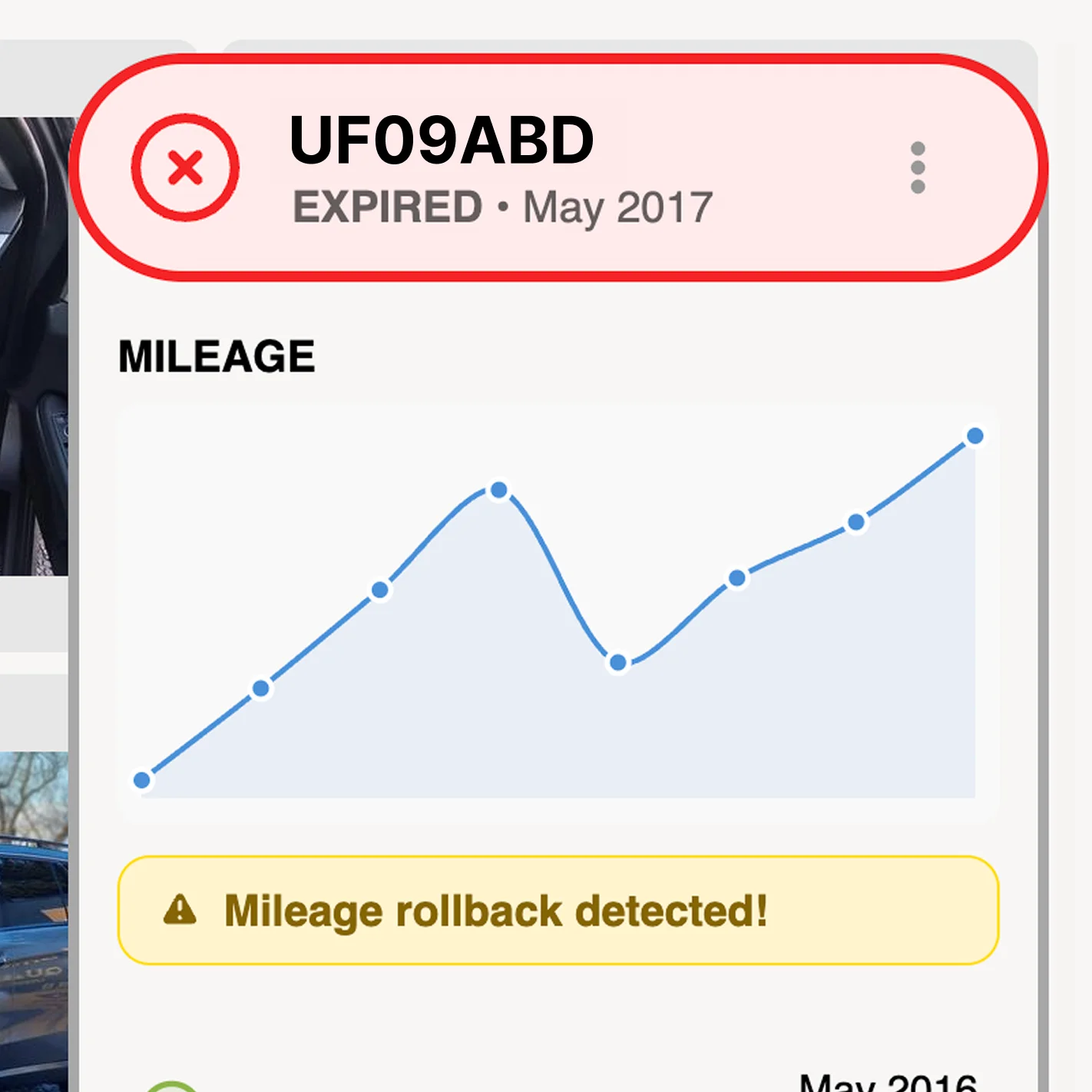
The Don't Buy A Lemon extension pulls this history automatically on every listing you browse, so you can see the full mileage timeline before you've even messaged the seller.

2. Look at the service history
A full service history contains stamps from garages with dates and mileage recorded at each service. Cross-reference those mileage figures against what the car shows today and against the MOT records.
Inconsistencies between the service book and MOT history are a strong indicator of tampering.
No service history at all isn't automatically suspicious, but it removes one of your key cross-reference points. Be more cautious and lean harder on the MOT records.
3. Inspect the interior wear
High-mileage cars show their age on the inside. If a car is advertised with 40,000 miles but the interior tells a different story, trust what you see.
Things to look at:
- Steering wheel. Heavy use wears through the leather or material, especially at the 9 and 3 o'clock positions.
- Driver's seat. Bolster wear on the driver's side, sagging cushion, or cracked leather is consistent with high mileage.
- Pedals. Rubber wear on the brake, clutch, and accelerator pedals is hard to fake. A deeply worn pedal on a "low mileage" car is a giveaway.
- Gear knob. Worn through its finish or sitting loose suggests heavy use.
A seller can replace a pedal set or fit a new steering wheel cover to disguise wear. Look for everything together, not just one item.
4. Check under the bonnet
High mileage leaves traces under the bonnet too. Hoses that are cracked or brittle, a battery that's clearly been replaced multiple times, or an engine that looks like it's been professionally cleaned (which can be done to hide wear and leaks) are all worth noting.
You're not looking for one definitive sign. You're building a picture.
5. Look for signs of instrument cluster replacement
On older cars, a clocking job sometimes involves swapping the entire instrument cluster for one showing lower mileage. Signs of this include:
- Screws or trim around the cluster that look disturbed or don't match the rest of the interior
- A cluster that looks noticeably newer or cleaner than surrounding panels
- Mismatch between cluster font or style and the rest of the dash
This is less common on modern cars with digital odometers, but not unheard of.
6. Check the V5C and service stamps for consistency
The V5C will show the date the car was first registered. Count up the MOT records from that point. A full history with consistent annual tests going back to registration is a good sign. Gaps are not.
If the service book stamps jump around in mileage, or if stamps are from garages that don't exist when you look them up, treat them as unreliable.
What to do if you suspect a car has been clocked
Don't buy it. Walk away. Even if you can't prove it definitively in person, the risk isn't worth taking.
If you've already bought a car and believe it was clocked, you may have a legal claim against the seller under the Consumer Rights Act or Misrepresentation Act. Gather all the evidence you have (MOT printouts, service stamps, photos) and take advice from Citizens Advice or a solicitor.
Report it to Trading Standards as well. Clocking is a criminal offence and reports help build cases against repeat offenders.
Stop checking manually. Start browsing smarter.
Every car you look at deserves a mileage check. Most people skip it because it takes too long. Don't Buy A Lemon does it for you automatically, on every listing, before you've even thought to ask.
Frequently asked questions
Is clocking illegal in the UK? Yes. Selling a car with a falsified mileage reading is a criminal offence under the Fraud Act 2006. It can also be pursued as a civil matter under consumer protection law.
Can digital odometers be clocked? Yes. It requires specialist equipment but it's possible. The MOT mileage records are the most reliable cross-check because they exist outside the car itself and can't be tampered with by the seller.
What if MOT records show a mileage drop but the seller has an explanation? Common explanations include instrument cluster replacements after a fault, which can reset the mileage. If the seller claims this, ask for proof of the repair. A genuine cluster replacement will be on a garage invoice. No paperwork means no credible explanation.
How far back do MOT mileage records go? DVSA records typically go back to 2005 for most vehicles. Older cars may have limited records.